At a Glance
- Led Google Health’s federated study tracking masking and distancing without central data.
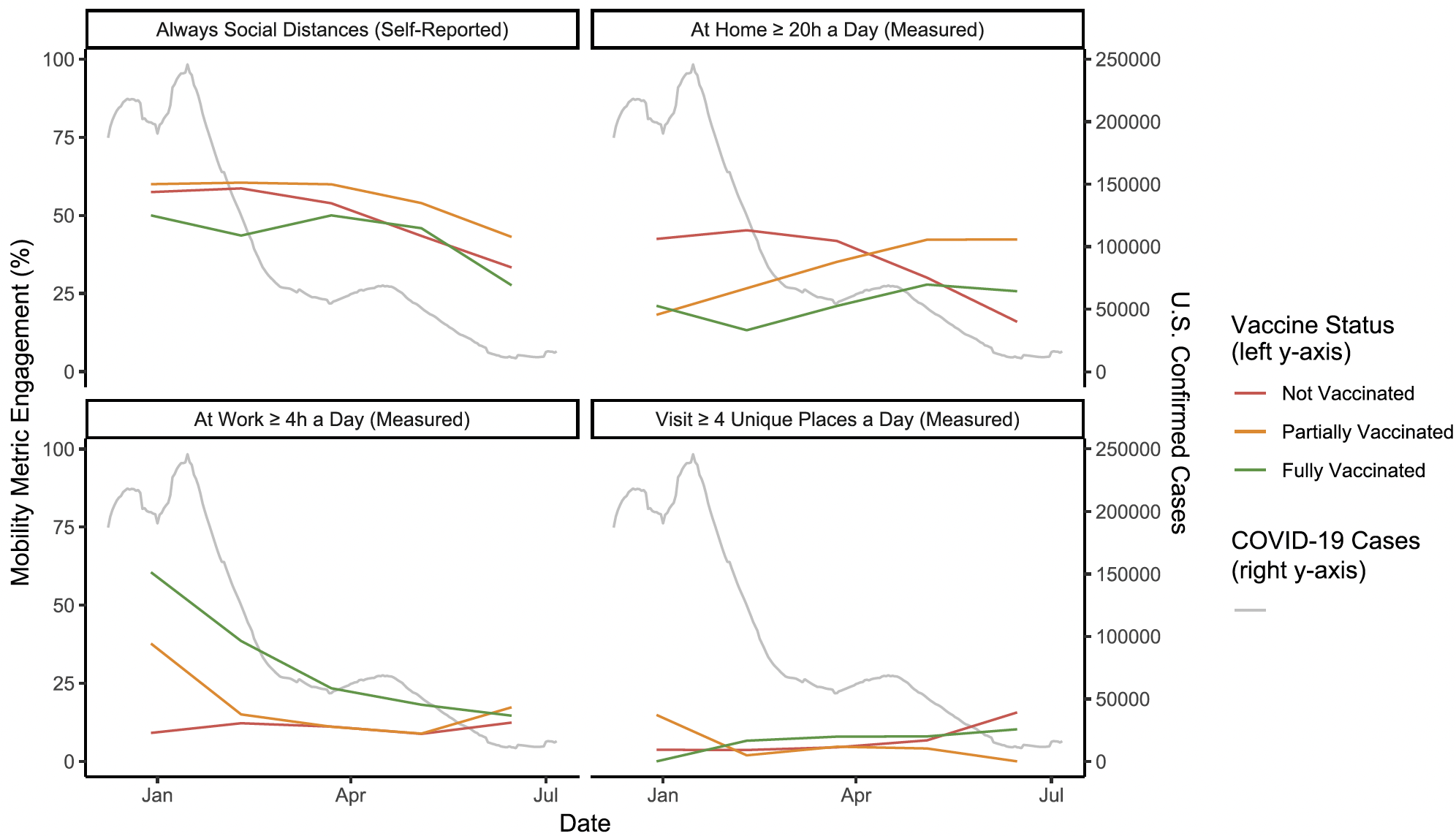
- Most maintained masking/distancing until fully vaccinated; vaccine-hesitant showed lower adherence.
- Showcased a privacy-centric blueprint using federated analytics and differential privacy.
Visual highlights
The Problem
- Measuring masking/distancing at scale is hard: intrusive tracking or biased self-reports.
- COVID mobility data was too coarse to link behavior changes to vaccination status.
- Officials needed detailed behavior insights without centralized sensitive data, risking distrust.
The Solution
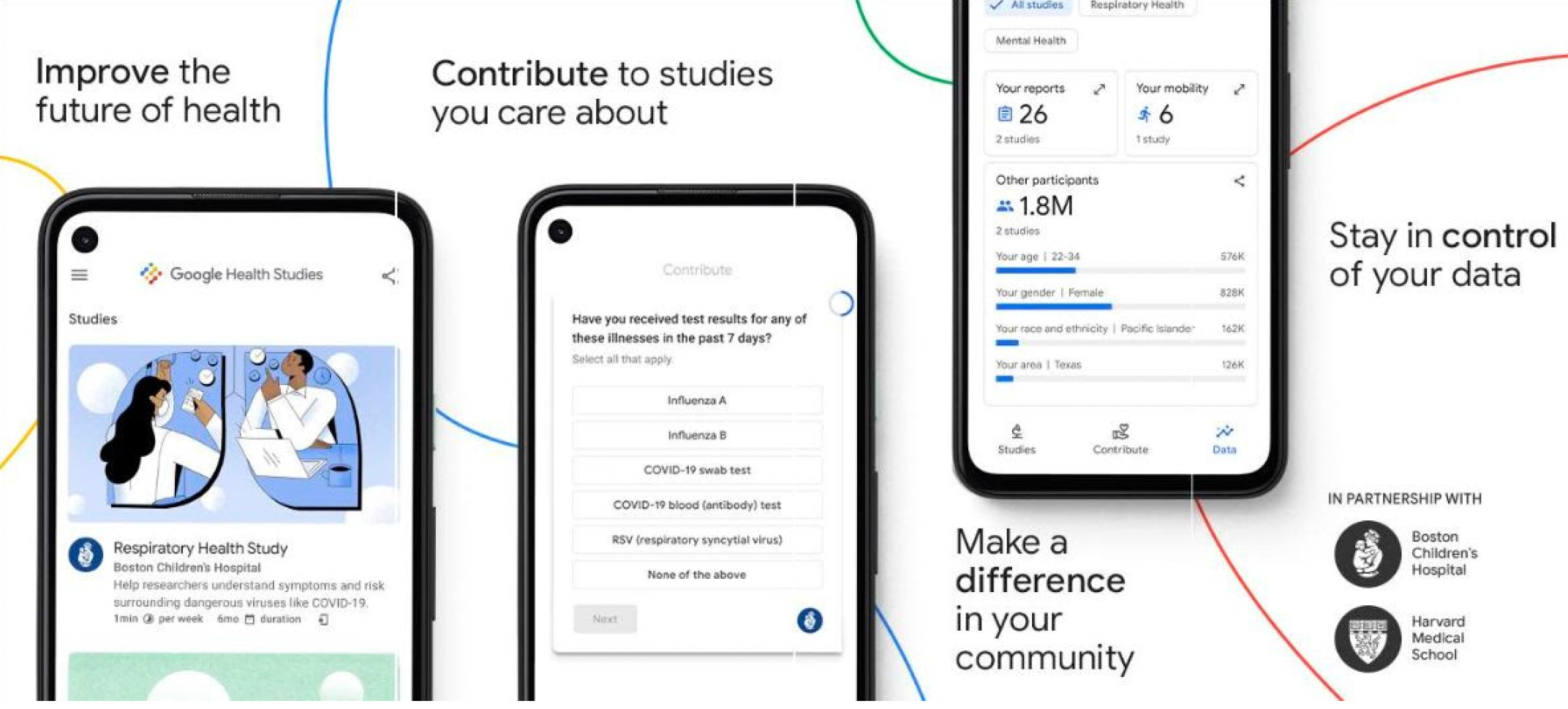
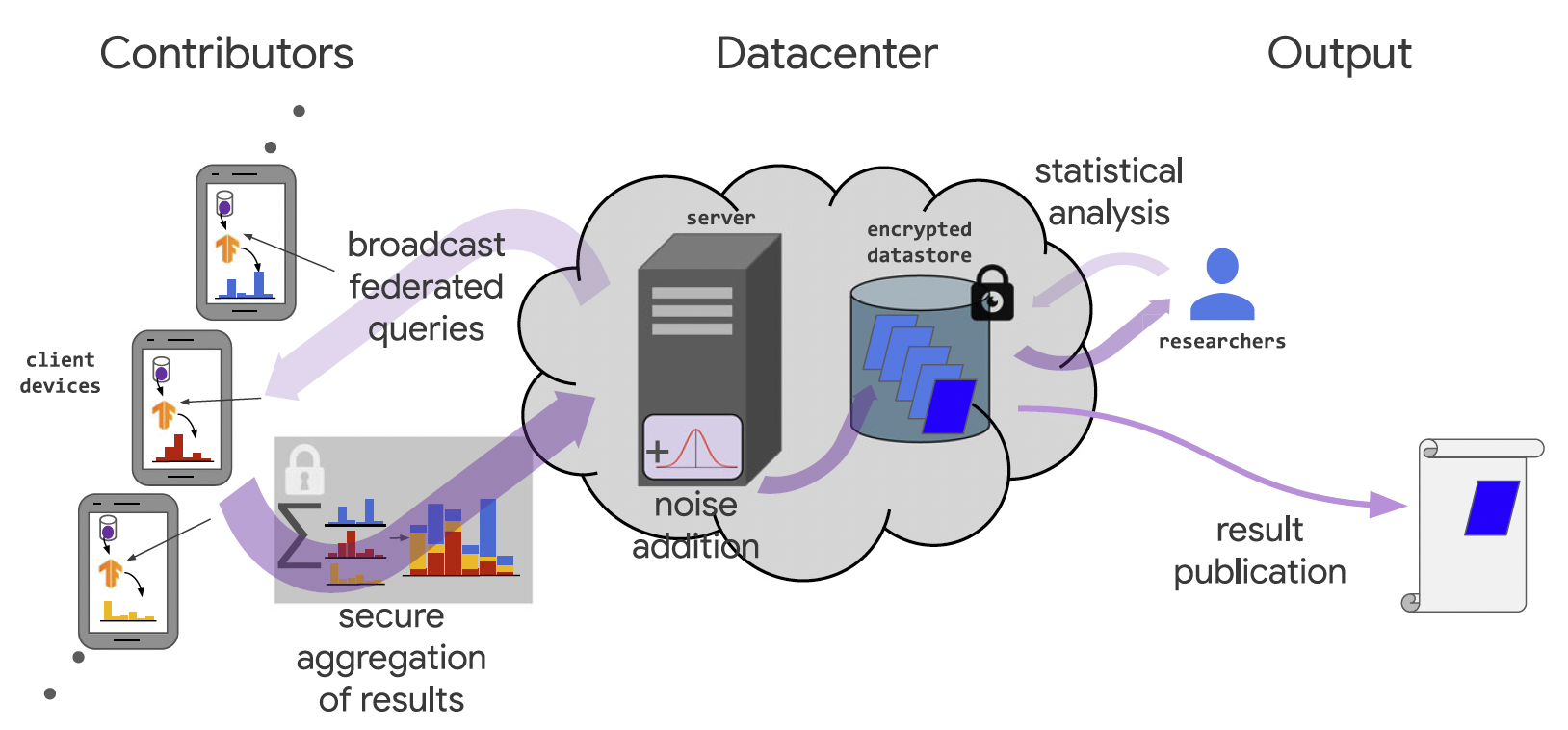
- Used Google Health Studies with opt-in surveys and on-device analysis; raw data stayed on phones.
- Applied differential privacy so shared aggregates couldn’t expose individuals.
- Linked vaccination status locally to analyze behavioral shifts anonymously.
- Demonstrated federated designs can answer epidemiologic questions without central data.
Architecture Overview
- Phones acted as local nodes processing surveys and any sensor data.
- Secure aggregation returned only encrypted, population-level totals.
- Added calibrated DP noise to obscure unique contributions while preserving signal.
- Validated with participation thresholds and simulations to test recovery of patterns.
- Weekly federated rounds produced interpretable, time-trended findings.
Results and Impacts
- Masking/distancing stayed high until full vaccination; resistant groups stayed low.
- Showed vaccination didn’t trigger early drop-offs; tailored messaging needed for resisters.
- Proved large-scale, privacy-preserving research feasible in real settings.
- Published in Nature Digital Medicine (2024), now a reference for ethical digital health.
Skills and Tools Used
| Technique/Skill | Tools/Implementation |
|---|---|
| Skill/Tool Category | Application in Privacy-Preserving COVID-19 Behavior Study |
| Federated Learning & Analytics | Implemented a federated analysis approach using Google’s privacy-preserving technology stack; orchestrated distributed data processing on user devices and aggregated results securely |
| Differential Privacy | Applied differential privacy techniques to ensure that aggregated data releases could not reveal any individual’s behavior, balancing noise addition with analytical usefulness |
| Mobile App Deployment | Collaborated on the Google Health Studies app deployment for the study, ensuring smooth user enrollment and data collection via a smartphone platform |
| Data Science Innovation | Developed novel validation and analysis strategies for a dataset that cannot be seen centrally; used simulation and advanced statistical reasoning to interpret federated results with confidence |
| Collaboration (Public-Private) | Worked closely with a major tech company’s research team (Google Health) and academic partners, coordinating cross-organization efforts in study design, IRB approvals, and result interpretation under a tight timeline |
| Privacy & Ethics in Research | Navigated complex privacy considerations, ensuring compliance with data protection standards and transparently communicating the privacy guarantees to participants to build trust in the study |
Cross-Project Capabilities
- Privacy-first analytics transferable to sensitive domains like patient or social data.
- Blended epidemiology with federated/secure computing for creative ML solutions.
- Bridged tech, academia, and public health for multi-stakeholder initiatives.
Published Papers/Tools
- Peer-Reviewed Publication: Nature Digital Medicine (2024) – real-world federated public-health analytics.Paper
- Framework for Future Studies: Shared protocols as a blueprint for privacy-preserving research.
- (Note: No raw dataset or app released; impact is methodology and influence on future studies.)